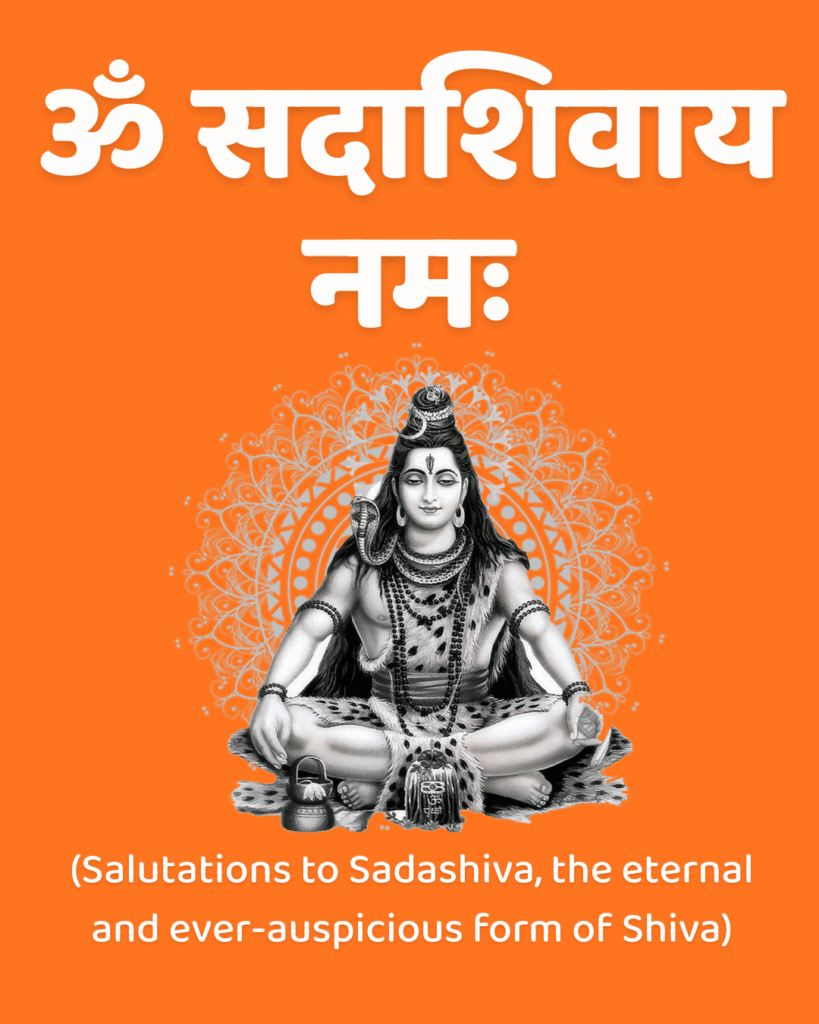
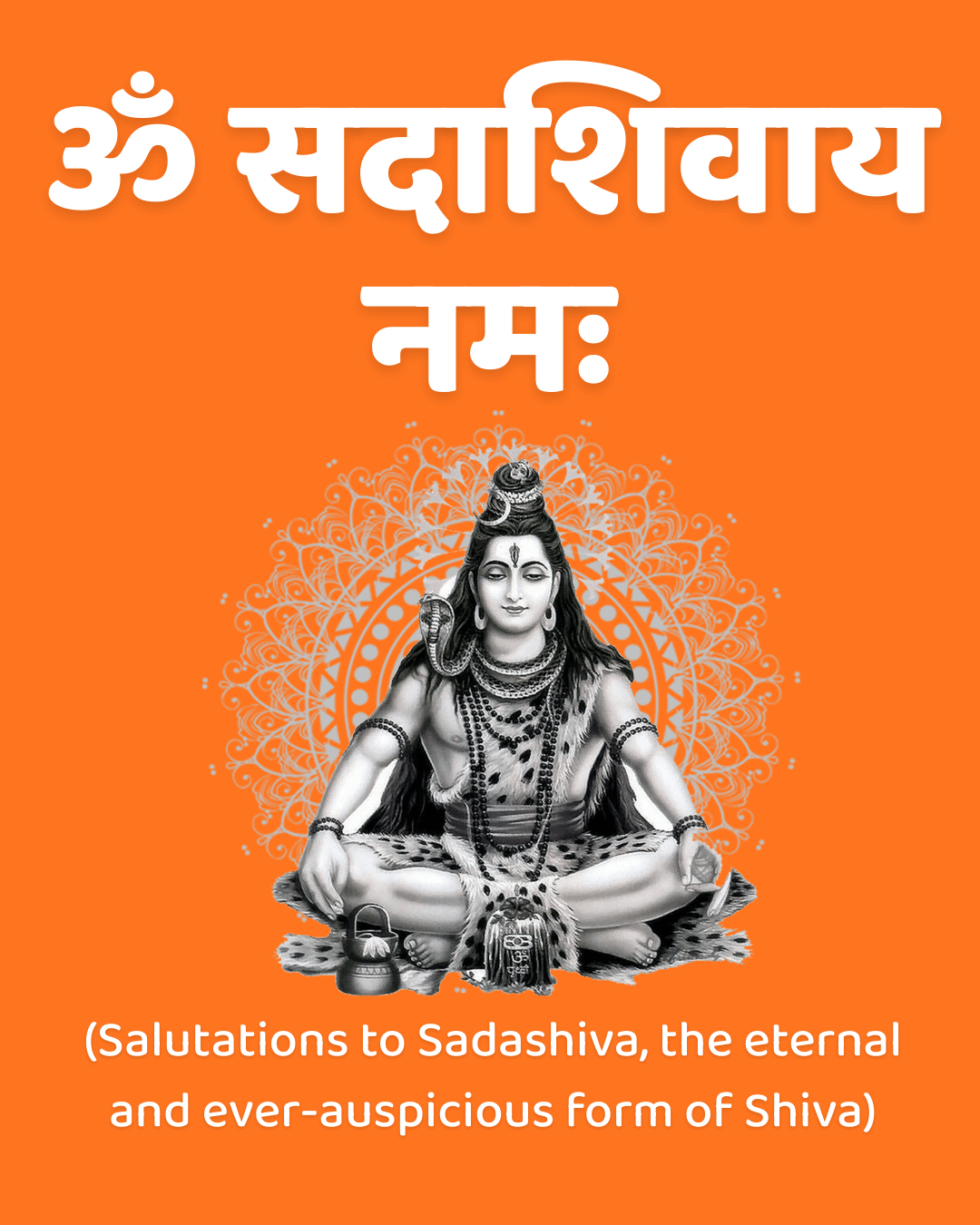
There is a difference between something that lasts a very long time and something that is eternal.
Things that last a very long time — mountains, stars, the deepest ocean — all of them began somewhere and all of them will end somewhere. Eternal is different. Eternal means no beginning. No end. No interruption. Not lasting despite time. Simply — outside time altogether.
This is the difference between Shiva and Sadashiva.
Shiva is the auspicious one, the ground of all being. Sadashiva is that — always. Permanently. Without exception. Sada means always, eternally, without a single moment of absence. And Sadashiva therefore means not just that Shiva is great or powerful or ancient — but that Shiva’s presence, Shiva’s auspiciousness, Shiva’s grace, is never not present. Was never absent. Will never be absent.
Om Sadashivay Namah. I bow to the one who is always Shiva.
This might sound like a philosophical statement. A comfortable metaphysical idea about the eternal nature of the divine. But there is a story in the Shiva Mahapurana that transforms it from a concept into something immediate and visceral and real. A story about a sixteen-year-old boy. And a noose. And the lord of death standing at the door.
The Story of Markandeya — From the Shiva Mahapurana
According to accounts in the Shiva Mahapurana, Kotirudra Samhita — there was once a sage named Mrikandu who, along with his wife Marudvati, had performed severe austerities to receive a child. Their devotion was so complete that Shiva himself appeared before them and gave them a choice.
He said — I can give you a brilliant, virtuous, spiritually radiant son who will live for only sixteen years. Or I can give you a son of ordinary qualities who will live to a hundred. Which do you choose?
Mrikandu and Marudvati did not hesitate. They chose the brilliant son.
The child was born and named Markandeya. From his earliest years it was clear that the choice had been right. Markandeya was everything his parents had hoped for and more — a scholar, a poet, a devotee of extraordinary depth and sincerity. From a very young age he worshipped the Shivalingam daily. Not as ritual. As conversation. As homecoming. As the one thing in all of existence that felt completely real.
The years passed. Markandeya’s sixteenth birthday arrived.
According to some accounts his parents tried to hide what was coming. But a child of Markandeya’s spiritual depth understood what his sixteenth year meant. He did not run. He did not bargain. He went to the Shivalingam and he worshipped as he always had — with flowers, with water, with the complete absorption of a soul that had found its centre.
Yamraj came.
The lord of death arrived at Markandeya’s door exactly as the day of his destined death unfolded. He came with his noose — the paasha — the cord with which he binds the soul and draws it away from the body. He stood before the young sage.
According to some accounts Markandeya looked at Yamraj. And then he turned back to the Shivalingam. He wrapped his arms around it and held on. Not in panic. Not in desperate clinging. In the absolute certainty of a devotee who knows exactly who he belongs to.
Yamraj threw his noose.
The noose fell — around both Markandeya and the Shivalingam together. The cord of death fell around the abode of the eternal.
And the Shivalingam split open with a sound that shook all three worlds.
Shiva burst forth. Blazing. Absolute. Unmistakable. Sadashiva — the eternally present one — present. Exactly here. Exactly now. Exactly when it mattered most.
According to some accounts in the Shiva Mahapurana — Shiva struck Yamraj with such force that the lord of death fell. And Shiva declared — this boy is mine. He is under my protection. Death has no claim here.
And then he turned to Markandeya and said — you will remain sixteen. Always. Death cannot touch you. Because you held on.
Markandeya became a Chiranjivi — one of the eternally living. The boy who had been born with sixteen years to live became the one who will never die. Not because death was defeated from outside. But because the eternally present one was present — exactly when the noose arrived.
This is what Sadashiva means in its most complete and most living form.
Not Shiva who arrives after a long delay. Not Shiva who responds when sufficient prayers have accumulated. Sadashiva — always Shiva — was already there. In the Shivalingam that Markandeya had been holding every day of his life. The arms that had worshipped daily were the same arms that clung in the final moment. The same lingam. The same presence. The same Sadashiva. It was not a new arrival. It was a revelation of what had always been there.
According to the Shaiva and Vedic tradition — the Maha Mrityunjaya Mantra, one of the most powerful mantras in the entire Vedic tradition found in the Rigveda and the Krishna Yajurveda, is traditionally connected to Markandeya. Aisa maana jaata hai that this mantra — the great victory over death — came through the devotion of the boy who held on to the Shivalingam as Yamraj stood at the door.
And isiliye — aisa maana jaata hai — that when we chant Om Sadashivay Namah we are not reaching upward toward an absent God and hoping he will eventually show up. We are acknowledging what Markandeya proved — that Sadashiva is already here. Always. In the same Shivalingam. In the same daily worship. In the same arms that hold on.
The noose can fall. Sadashiva is already present before it arrives.
(इस कथा का मूल आधार शिव महापुराण, कोटिरुद्र संहिता और मार्कंडेय पुराण से जुड़ा माना जाता है। मार्कंडेय के आंतरिक अनुभव और यमराज के साथ संवाद का कुछ विवरण भक्ति परंपरा में इस प्रकार सुनाया जाता है।)
Do you love listening to Lord Shiva’s chants? If yes, then we have something special for you. Play a calm and peaceful solitaire game where every move plays a Shiva mantra for you.
Explore 12 Jyotirling Parikrama — including the sacred Vaidyanatha Jyotirlinga, where Jagadishwara manifested as the divine healer — and while doing so, listen to the most important mantrochchar here:
👉 https://www.mysacredsolutions.in/12-jyotirling-parikrama/