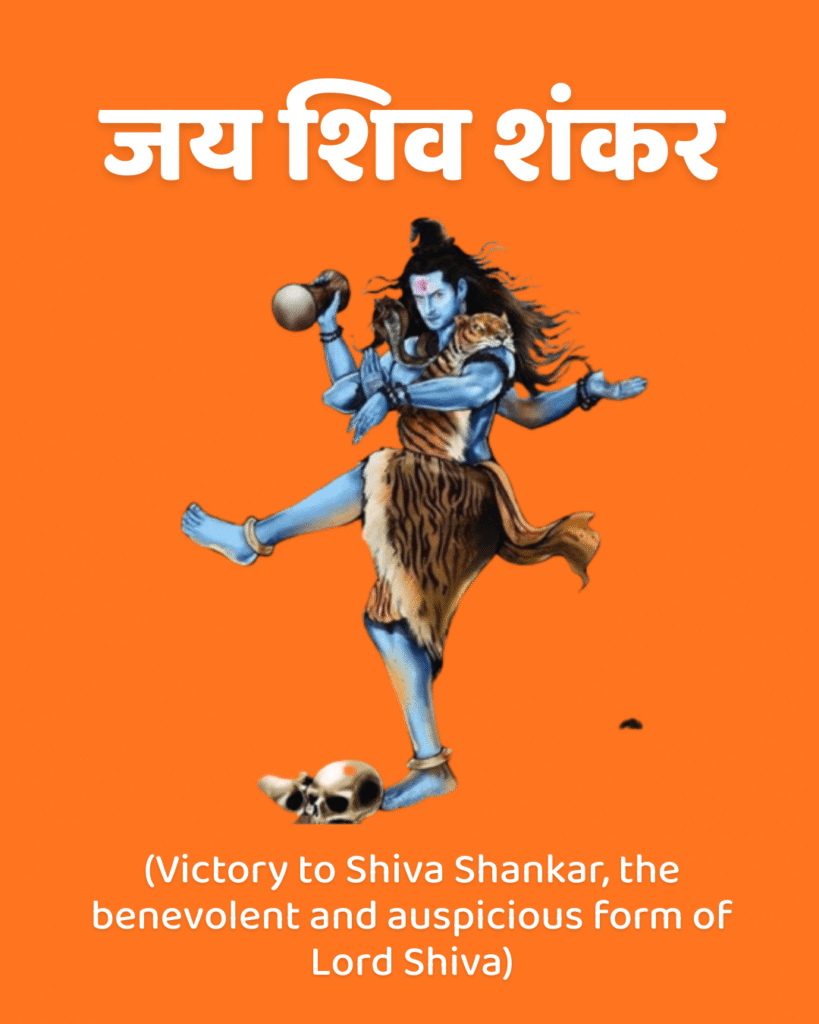
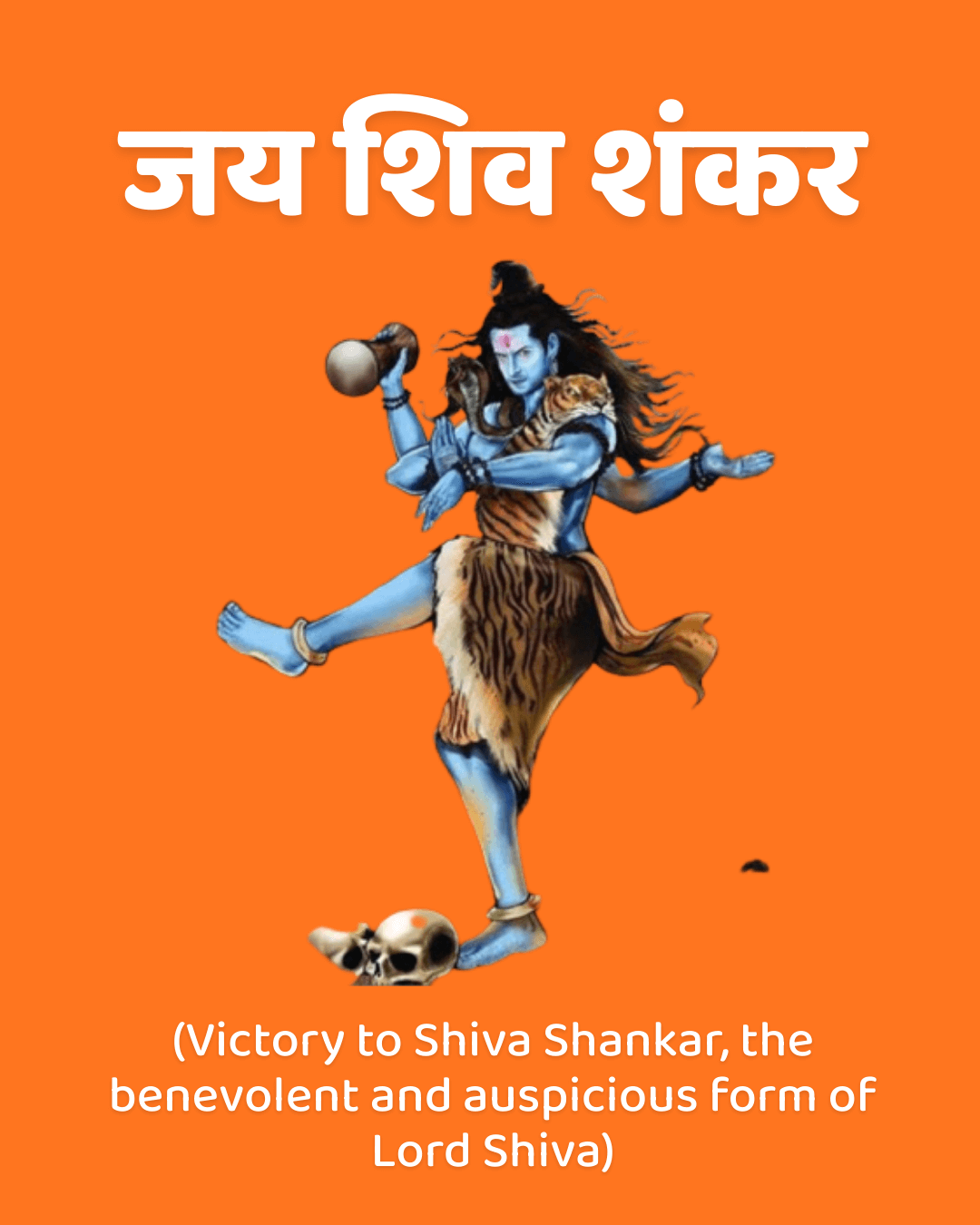
If you want to understand the warmest and most joyful face of Lord Shiva, learn this name. Shankar. It is not a fierce name. It is not a name about destruction or cosmic power or divine severity. Shankar is the name your grandmother sings while cooking. It is the name painted on the back of trucks on Indian highways. It is the name that children in villages call out during festivals without even knowing its meaning. Because Shankar feels like home. Shankar feels like warmth. And that feeling is exactly what the name means.
Shankar comes from two Sanskrit words. Sham means happiness, well-being and peace. Kara means the one who creates or gives. So Shankar means the creator of happiness. The one who gives well-being. The one who brings peace wherever He goes. Shiv Shankar means the auspicious creator of happiness. And Jai Shiv Shankar means victory to the auspicious creator of happiness who blesses all creation.
The Story of Adi Shankaracharya and His Mother
According to accounts preserved in the Shankaradigvijaya — the classical biography of Adi Shankaracharya written by Madhavacharya — there is a story about India’s greatest philosopher that carries the heart of this mantra more beautifully than any other.
Shankaracharya was born in Kerala around 788 CE. His mother Aryamba named him Shankara — after Lord Shiva himself. From the very moment of his birth she dedicated him to Mahadev. The name she gave him was not chosen lightly. It was a prayer. It was a declaration. Shankara — the auspicious one. The one who carries Shankar’s grace into the world.
As a young boy Shankaracharya took sannyasa — renounced the world completely to pursue the highest truth. His mother wept but gave her blessing. He left home and became the greatest philosophical mind India has ever produced. By the age of sixteen he had written his commentaries on the Brahmasutra and the Upanishads that are still studied in universities across the world today.
But the story that reveals the deepest meaning of Shankar is not about his philosophy. It is about what happened when his mother Aryamba lay dying.
Shankaracharya travelled back to Kerala to be with her. She was old and frail. She was frightened. According to some accounts she asked him — son, will Mahadev be with me when I go?
Shankaracharya sat beside her. He took her hand. He began to chant softly.
Om Namah Shivay. Om Shankaray Namah. Jai Shiv Shankar.
Those who were present said the room filled with an extraordinary stillness. A peace that had no explanation. His mother’s breathing slowed and calmed. She looked at her son’s face. She smiled. And she left this world peacefully — with Shankar’s name in the air around her.
But the story does not end there. Because of traditional and caste objections, the villagers refused to help Shankaracharya perform his mother’s last rites. A sannyasi was not supposed to perform family rituals. He was told he had no right.
Shankaracharya performed them alone. With his own hands. In the small backyard of the home where he was born. He gathered the wood. He lit the fire. He chanted Shiva’s name through every moment of it.
He later wrote — it was in that moment that I understood what Shankar truly means. Not the destroyer. Not the cosmic ascetic on a distant mountain. But the one who is present. Who stays. Who accompanies every soul through every passage — including the last one. That is Shankar. The grace that does not leave.
This is why, according to some Shiva devotees, the name Shankar carries a warmth that no other name of Shiva carries in quite the same way. Because Shankar is not Shiva at a distance. Shankar is Shiva close. Shankar is Shiva in your kitchen, in your family, in your grief, in your ordinary day. He is not waiting in a temple for you to arrive. He is already in the room.
Har Har Mahadev is the warrior’s cry. Om Namah Shivay is the meditator’s prayer. But Jai Shiv Shankar is the common person’s song. It is for everyone. The farmer and the businessman. The student and the grandmother. The rich and the poor. Shankar belongs to all of them equally.
Sing Jai Shiv Shankar today. Not formally. Not with ceremony. Just with a smile on your face and warmth in your heart. Like you are calling the one who is already in the room. Because He is.
(इस कथा का आधार शंकराचार्य की जीवनी शंकरदिग्विजय से जुड़ा माना जाता है। कुछ विवरण भक्ति परंपरा में इस प्रकार सुनाए जाते हैं।)
Do you love listening to Lord Shiva’s chants? We have something special for you. Play a calm and peaceful solitaire game where every move plays a Shiva mantra for you. Explore Om Namah Shivay Solitaire here:
https://www.mysacredsolutions.in/om-namah-shivay-solitaire/